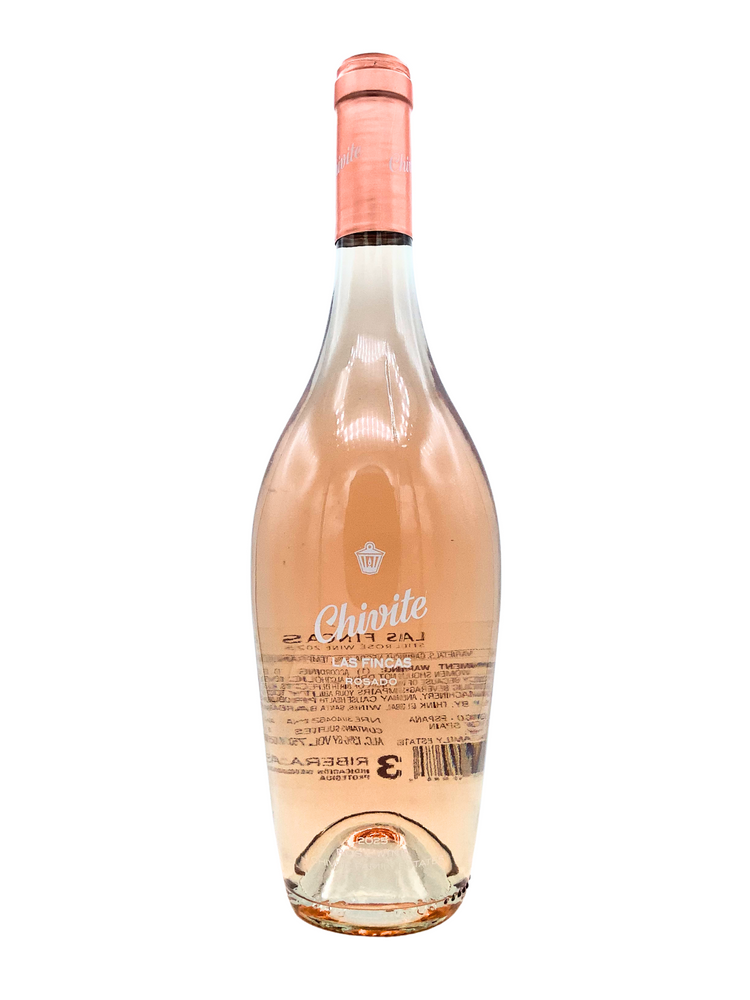

2025 Bodegas Julian Chivite Las Fincas Rosado
- Regular price
- $24.99
- Regular price
-
$29.99 - Sale price
- $24.99
- Unit price
- per
Type Rose
Read About the WineAvailability varies by store. If you experience an issue at checkout, please try purchasing this item separately. If your order is assigned to a different store at checkout, place it, then contact us and we’ll assist.
Shipping is unavailable in Wisconsin
Rose Wine
Gravitas, Chilled ~
Twenty years ago, I put together one of the first serious dry rosé selections in the Wisconsin market — a real summer set, built on the idea that pink wine deserved to be taken as seriously as anything else on the shelf. My wholesalers thought I'd lost my mind. Dry rosé, as a category worth building a season around, in Milwaukee? Nobody was asking for that. Now you can walk into practically any corner liquor store in this city and find two or three bottles without trying, which still strikes me as faintly miraculous when I think back on how that started.
Twenty years of watching a category go from a hard sell to wallpaper also means I've tasted an enormous amount of rosé, and it's left me with a correspondingly high bar for what actually earns real attention. So when a rep poured me the 2025 Bodegas Julián Chivite Las Fincas Rosado on a fairly ordinary Tuesday, I wasn't expecting to be surprised.
I was wrong. I got a wine that stopped the conversation.
Here's the thing about Las Fincas — it wasn't dreamed up by a marketing department trying to solve for July. It came out of a decades-long friendship between the Chivite family and the Arzak family, of the legendary Basque restaurant Arzak, and after enough shared meals Julián Chivite and Juan Mari Arzak landed on a simple question: what rosé would they actually want sitting on their own table? This wine is the answer. That's a very different starting point than "let's make something pink and profitable," and you can taste the difference immediately.
Chivite, for what it's worth, has been answering questions about wine since 1647. That's not a typo. This is one of the oldest continuously documented wine families in Spain, and everything that family has learned in three and a half centuries gets pointed, in this bottle, at something almost absurdly modern: delicacy that never tips into thinness, pallor that never tips into anemia.
So what's in the glass? A 50/50 blend of Garnacha and Tempranillo off Finca Legardeta in northern Navarra, 450 meters up on clay and limestone, where Atlantic air keeps the acid honest even as the Spanish sun does its work. Chivite makes it by saignée — bleeding juice off the skins early rather than fighting for color — ferments it cold, and lets it sit on its lees a while before bottling. The pale color everyone fixates on isn't the goal. It's the receipt. What they're actually chasing is texture underneath restraint, and they get it.
Wild strawberry first, then something closer to underripe raspberry, white peach, a little rose petal and citrus blossom, with a stony, herbal undertow that keeps the whole thing from ever going candied. The Garnacha gives it width; the Tempranillo gives it a spine; the lees work adds a faint creaminess right through the middle that you don't expect and then can't stop noticing. It finishes saline and floral and sticks around far longer than a wine this pretty has any obligation to.
I spent the better part of two decades trying to talk this market out of exactly the theory you might still be holding — that rosé is for patios only, something cold and pink to hold while you decide whether applying sunscreen counts as working out. Many rosés are still of that class. But not this one.
Tim Atkin gave this wine a 93, which is nice, but the more useful data point is that I opened a bottle on my own deck with nothing more ambitious than grilled chicken and went back for a second before I'd finished the first plate. It pairs well with sushi, grilled shrimp, tomato salad, saffron risotto, charcuterie, soft cheeses, and anything drowning in respecatbly good olive oil. Chivite's own list — seafood, rice, white meats, even barbecue — undersells how far this wine will actually go with your late-summer pairings.
I try not to throw fancy words around, but this is a wine that earns one: it is the least meretricious pale rosé I've had in years — nothing showy, no prettiness for prettiness' sake—just a wine made with three and a half centuries of conviction behind it.
Serve it cool, not glacial — 50 to 54°F — pour it into a real glass, put something good on the table, and let this pale little charmer shine with a leisurely meal.