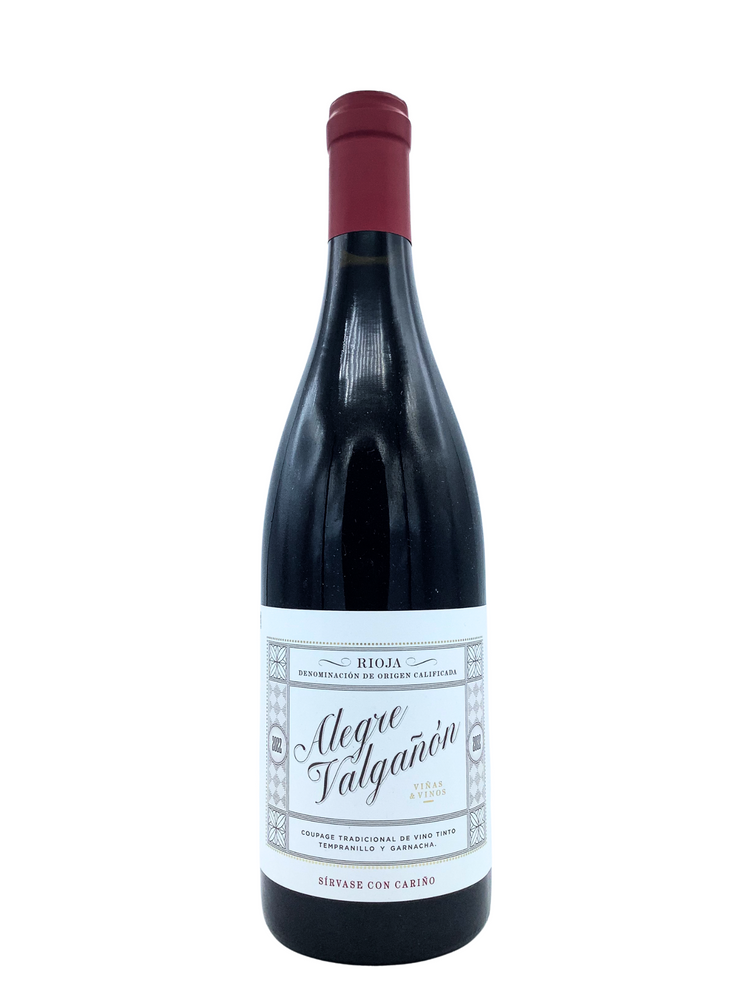

Alegre Valganon Rioja Tinto
- Regular price
- $24.99
- Regular price
-
- Sale price
- $24.99
- Unit price
- per
Type White
Read About the WineAvailability varies by store. If you experience an issue at checkout, please try purchasing this item separately. If your order is assigned to a different store at checkout, place it, then contact us and we’ll assist.
Shipping is unavailable in Wisconsin
Get to Know This Product
Rioja is one of the great old-vine treasure chests of the wine world, even if you wouldn’t have guessed it from the labels that made the region famous. For decades, Rioja’s reputation rested on the grandes marcas, large historic houses quietly buying fruit from thousands of growers across a patchwork of ancient vineyards. Hidden inside that system was the real resource: bush-trained vines planted by grandparents and great-grandparents, many dating to the first half of the twentieth century, rooted deep in Rioja’s limestone, sandstone and clay.
Now a new generation is putting those vineyards back at the center, and Alegre Valgañón is exactly the kind of producer that makes Rioja feel newly exciting. Founded by husband-and-wife team Oscar Alegre and Eva Valgañón, this tiny estate works some of the oldest sites in the cool, elevated reaches of Rioja Alta near Sajazarra. Instead of chasing the heavily oaked, internationally styled Riojas that once dominated export markets, they focus on something more specific: old vines, high elevation and a cleaner, more site-forward expression.
The 2022 Rioja Tinto shows that direction clearly. The fruit is largely old-vine Tempranillo from high-altitude parcels where cool nights preserve freshness and aromatic lift. The result isn’t about muscle. It’s about energy and detail.
In the glass, expect wild red cherry, crushed raspberry, rose petal and blood orange, plus hints of mountain herbs. Underneath sits the savory complexity old vines tend to bring: dusty earth, subtle spice and a touch of iron-rich minerality. Tannins are fine and graceful, giving the wine a clear, transparent feel while keeping Rioja’s identity intact.
What I love most is how clearly this bottle fits a broader shift across Spain. Young growers are returning to forgotten vineyards, rescuing ancient plantings and proving that some of the most exciting wines don’t come from newly planted prestige estates, but from humble old vines that survived long enough for the right hands to take them seriously.
This is Rioja through a smaller lens and sharper focus. Less oak. Less cellar gloss. More vineyard. And when those vineyards happen to be 70, 80 or 90 years old, that’s a very good thing indeed.