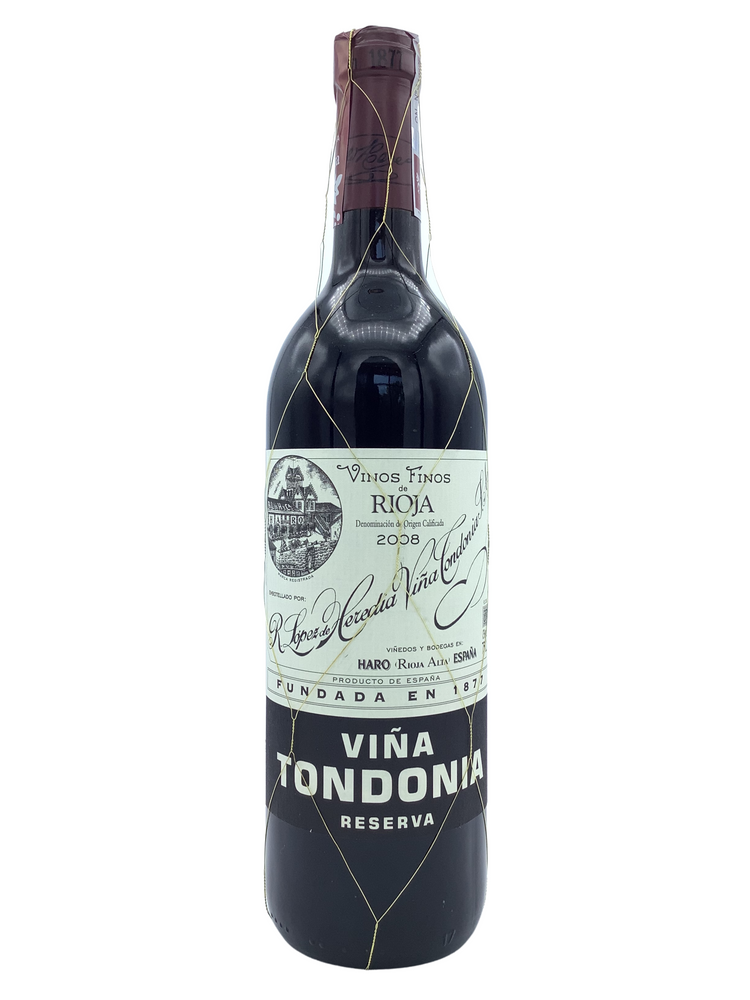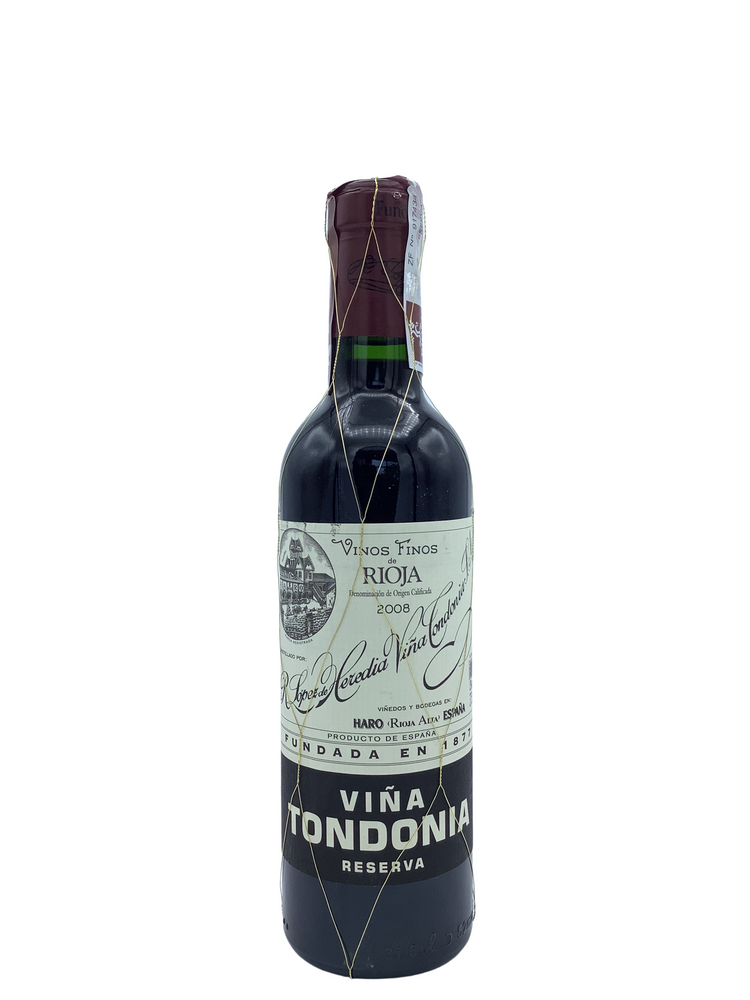


Lopez de Heredia Vina Tondonia Reserva Red
- Regular price
- $69.99
- Regular price
-
$89.99 - Sale price
- $69.99
- Unit price
- per
Type Tempranillo
Read About the WineAvailability varies by store. If you experience an issue at checkout, please try purchasing this item separately. If your order is assigned to a different store at checkout, place it, then contact us and we’ll assist.
Shipping is unavailable in Wisconsin
Get to Know This Product
A Quiet Conversation With The Dead — And The Greatest Rioja I've Tasted In Years
María José López de Heredia runs one of Spain's most revered wine estates. She is the fourth generation of her family to do so, and she has a habit that I find, depending on your disposition, either slightly louche or deeply moving.
She talks to her ancestors every day.
Not metaphorically. Not in the abstract sense that all great winemakers honor their predecessors. Literally — a quiet daily conversation with her great-grandfather Don Rafael, her grandfather, her father — the three generations of López de Heredias who built, brick by barrel by bottle, one of the most extraordinary wine estates in the world.
"I do speak to them every day," she told Wine Spectator, with the casual certainty of someone for whom this requires no further explanation.
Having tasted the 2012 Viña Tondonia Reserva, I understand completely. These are wines that make you believe the dead are still present.
Don Rafael López de Heredia y Landeta founded the bodega in 1877 in the town of Haro, in Rioja Alta — one of the first three bodegas in the entire Rioja region, established when phylloxera was destroying French vineyards and the world's wine trade was being remade from scratch. Don Rafael fell in love with the combination of limestone soils, Atlantic climate and the great sweeping bend of the Ebro River, and he built something that has, in the nearly 150 years since, changed almost not at all.
The cellars are carved 200 meters into natural sandstone, ten meters deep, housing 12,900 barrels at any given time. The family operates its own cooperage — their coopers repair and maintain barrels in-house, sourcing new wood from the Appalachian Mountains of America and aging it for two years in Spain before it ever touches wine. The wines ferment with indigenous yeasts. Malolactic fermentation happens spontaneously. And the wines age in those old American oak barrels — six years for the Reserva, a decade or more for the Gran Reservas — until the family, and only the family, decides they are ready.
Which is why, while the rest of Rioja is releasing their 2022s and 2023s, López de Heredia is only now sharing their 2012 Reserva with the world.
This is not stubbornness. This is not fustian traditionalism for its own sake. This is a family that has spent nearly 150 years understanding something the modern wine trade has largely forgotten: that great wine is not finished when fermentation stops. It is barely begun. And patience — genuine, unhurried, generational patience — is not a marketing strategy. It is simply how these wines have always been made.
The Viña Tondonia vineyard itself is one of Spain's most beautiful pieces of agricultural land — a sweeping, shell-shaped depression on the right bank of the Ebro, planted in alluvial clay over limestone, cooled by Atlantic breezes that allow Tempranillo, Garnacha, Graciano and Mazuelo to ripen slowly, building complexity without surrendering acidity. The vines' roots reach thirty meters into the earth in search of water and minerals. You can taste those thirty meters in the glass.
The 2012 Reserva unfolds slowly — and I mean that as the highest compliment. It opens quietly, like an old library door, and what lies beyond is dried cherries, wild strawberries, orange peel, cedar, tobacco leaf, leather, dried rose petals, black tea, forest floor and a delicate balsamic spice that has no modern equivalent in wine. The palate is pellucid and silky — bright red fruits still vibrant after a decade, carried by fresh acidity and tannins so fine they are felt rather than tasted, fading into a finish of dried herbs, mineral earth and the ghost of American oak so thoroughly integrated it has become part of the wine's identity rather than an imposition upon it.
This is Rioja as it existed before richness and extraction became virtues. A wine of nuance, restraint and effortless complexity — it inspires and rewards your careful attention.
Outside the ancient bodega in Haro, there is a pavilion designed by Zaha Hadid — the late, great architect of swooping, futurist curves — commissioned for the winery's 125th anniversary. It is, by every measure, one of the most beautiful small buildings in Spain. And it sits in magnificent, raffish incongruity next to one of the most unchanged wine operations on earth, as if to say: we know exactly what we are, and we are comfortable enough in that knowledge to find it amusing.
I find it rather wonderful.
Pour this with roast lamb, grilled mushrooms, duck breast, Jamón Ibérico or aged Manchego. Or simply open it on a quiet evening and let María José's daily conversation with her ancestors wash over you.
The 2012 is drinking beautifully now and will continue to evolve gracefully for another two decades. There is no urgency. There never is, with López de Heredia.