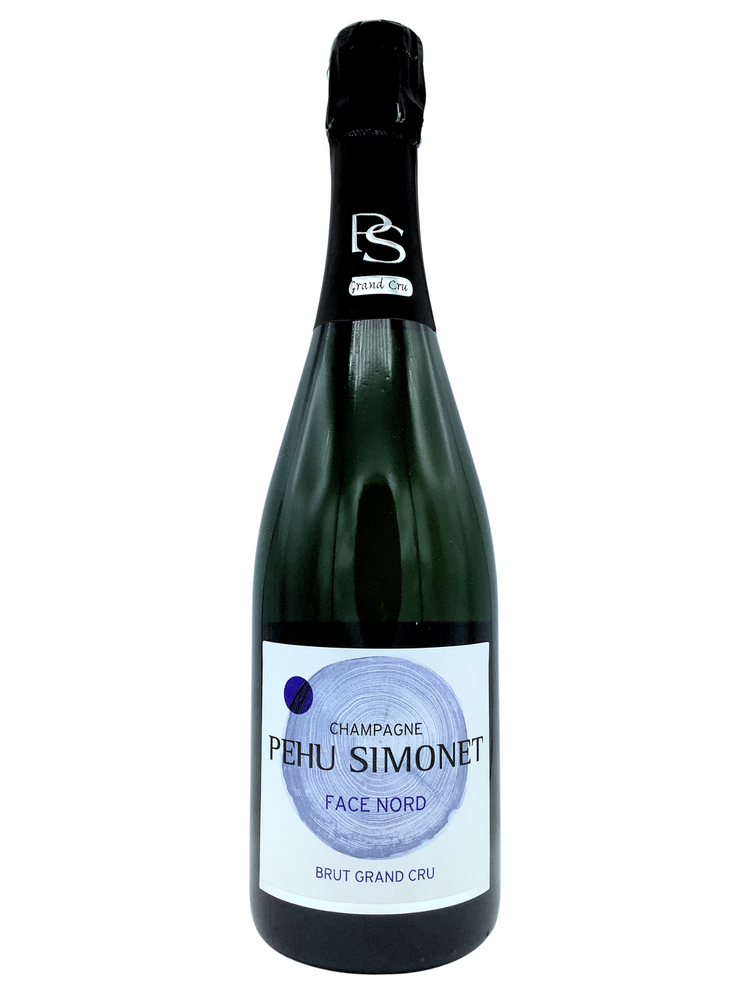

Pehu Simonet Face Nord NV Brut
- Regular price
- $79.99
- Regular price
-
- Sale price
- $79.99
- Unit price
- per
Type Wine
Read About the WineAvailability varies by store. If you experience an issue at checkout, please try purchasing this item separately. If your order is assigned to a different store at checkout, place it, then contact us and we’ll assist.
Shipping is unavailable in Wisconsin
Get to Know This Product
Widow Pehu started it in the early 1900s. Antonin Pehu carried on after her. In the early 1970s, David Pehu's parents put the family name on its own label for the first time, calling it Pehu-Simonet. David started working in the cellar in 1988, after studying oenology in Burgundy, and has been running the estate on his own since 1995. That's four generations of the same family farming the same hillside in Verzenay, which is a very long time to get this stubborn about one idea.
The idea is simple: only Grand Cru fruit goes into his own wines. David also farms Chardonnay in Villers-Marmery, which isn't Grand Cru-classified. Rather than blend it in or bottle it separately, he sells the grapes to a merchant. It would be easy money to keep. He doesn't want it in his wine, so it's gone.
What he keeps comes from Verzenay, Verzy, Sillery and Mailly — some of the most serious Pinot Noir vineyards in Champagne, all Grand Cru sites in the Montagne de Reims. He farms the hard way on purpose: sheep graze between the rows in winter, horses plow roughly half the estate instead of tractors to avoid compacting the soil, and hedgerows and trees encourage biodiversity. He started converting a hectare in Mailly to organic farming in 2008 and has since brought the entire estate up to certification. He even developed his own higher trellising system to help the vines retain natural acidity as growing seasons get warmer. This is someone thinking decades ahead, not just about the next harvest.
The cuvée's name explains itself once you know the geography. Verzenay sits on the north-facing slope of the Montagne de Reims — the cooler, shadier side of the hill, where ripening takes longer and the fruit retains its acidity. Face Nord. North face. It's not a poetic flourish. It's a description of exactly where these grapes grow.
The wine is predominantly Pinot Noir, with a smaller portion of Chardonnay, blending a base harvest with reserve wines from several vintages. It's the kind of layered, non-vintage construction that allows a small grower to balance differences between years without sacrificing character. Part of it ages in stainless steel, part in barrel, followed by extended time on the lees and a restrained dosage. The result is precise rather than showy: cherry and wild strawberry up front, crushed rose petals and red apple, a thread of citrus zest and a chalky mineral backbone that keeps the fruit from tasting soft or simple.
You've probably had plenty of Champagne from houses with names you recognize from billboards. This is the other kind — one family, four generations and a winemaker disciplined enough to turn down perfectly good grapes because they didn't meet the standards of his own label.
Pour it cold, give it a minute to open and taste what four generations of conviction can produce.
— Ben